We are forever grateful to our reviewers, and deeply honoured to have shared precious moments of life. Thank you!
Capital and the Debt Trap combines a searing critique of the unstable debt- and-profit driven system that came close to final collapse in the Great Crisis with a fine portrait of the modern cooperative alternative that exists today in Mexico, Canada, France and Spain. Are these perhaps the small creatures that will survive and flourish after the great dinosaurs are gone? Let’s hope so.
James K. Galbraith, Professor of Economics at the Lyndon B. Johnson School of Public Affairs and University of Texas at Austin, Author of The Predator State: How Conservatives Abandoned the Free Market and Why Liberals Should Too.
This book is simply a masterpiece on cooperativism for the xxi century. Forward and outward looking, from exceptionally well informed cooperatives analysts. It outstandingly demonstrates why cooperatives are more resilient to the crisis and avoid falling into the dept trap and its implacable cohort of inhuman effects.
A decisive contribution not only to economic democracy but also to Democracy as a political system by which men and women preserve and control our common good and common wealth, on the basis of one person-one vote, independently of their wealth or capital. A rational and passionate book of hope for our common future.
Yves Cabannes, Chair of Development Planning, Development Planning Unit, University College London, Formerly senior advisor to the Municipality of Porto Alegre, Brazil. Regional coordinator of the Programme of Urban Management of the United Nations for Latin America and the Caribbeans (1997-2003)
This is a timely and important book which both analyses current economic turmoil and shows how the crisis may foment new and more co-operative forms of enterprise. Anyone interested in advancing the cause of participatory ownership as one means of guarding against recurrent crises should read this book.’
George Irvin, Professorial Research Associate in economics, School of Oriental and African Studies, University of London, Author of “Regaining Europe: An Economic Agenda for the 21st Century”. Prof. George Irvin passed away in 2021.
This book presents a thoughtful and exciting consideration of the roles cooperatives can play – and should be expected to play – today . . . It deserves to be widely read and discussed within and across the boundaries that have long divided cooperative proponents and the general public.’
Ian MacPherson, Emeritus professor of history, University of Victoria, Canada, Author of “Hands around the globe : a history of the international credit union movement”. Prof MacPherson passed away in 2013.
This book is a major step forward in understanding the working of co-operative economies. Its appearance could hardly have been more timely. At a point when the global financial system and the models of economic governance have been thrown into question, it shows how it is that co-operative financial systems are more crisis resistant than contemporary private banking, and how finance can be structured to service long term local and industrial growth rather than subject it to the imperative of short term profitability.
More generally, the authors describe an architecture of co-operative governance that has not only been innovative and resilient but is particularly well suited to any post crisis world that is reshaped round multi stakeholder engagement.
Robin Murray, Senior Visiting Fellow at the London School of Economics Centre of Global Governance, Author of ‘Co-operation in the Age of Google’, Formerly Director of Industry at the Greater London Council
“This elegant and deeply-informed inquiry weaves together several themes, each significant in itself, even more so as their relations are developed: the deep and persistent crises of capitalism, in the current phase highly financialized, and the fundamental issue of decision-making in social and economic institutions, with special attention to the elaborate growth of cooperatives of many varieties, the forms they have taken, the problems they face, and their great promise in overcoming economic crisis, social malaise, and democratic dysfunction. It really does read like a novel.”
Prof. Noam Chomsky, MIT, USA
“This is one of the best books on the co-operative role in the contemporary economy I have ever read. I hope and trust it will become a ‘best seller’… Capital and the Debt Trap provides a sustained critical political economic analysis of the processes in the modern global economy that have led to the current crisis and will, if left unchallenged, lead to the next one. The authors provide a detailed examination of the dimensions, causes and stages of the economic crisis… This book by Claudia Sanchez Bajo and Bruno Roelants makes an important contribution to raising awareness of the co-operative potential. Its four case studies give us serious co-operative examples of what community can achieve through association. The contours of a co-operative economy that is facing up to the multidimensional crisis we face today must face up to and answer the issue of how to achieve a zero growth or even a low grow economy. If ever a book was inviting a sequel it’s this one. I look forward to its authors writing it.
This work on the current global crisis of capitalism is a surprising and fascinating analysis of the transformation that today´s dominant world mode of production has gone through … Claudia Sanchez Bajo and Bruno Roelants undertook a long and careful research on the “Mother of all crises“, placing their analysis within the framework of the transformations stemming from the 3rd Industrial Revolution, that of information technology and the Internet.. The authors of this book show that, while the crisis attracts all the attention, there is a new capitalism coming through the twilight… Against this background, the authors of the book outline the emergence of financial power, measured by the expansion of financial wealth at the expense of the growth of real wealth… The authors then… try to “find out how a path is being built socially, institutionally and politically, in such a way that it ends up destroying more wealth than it generates.” … It is composed of a sequence of three traps that close down in succession, imprisoning those who get indebted in the naive belief that banks´ credit availability will be forever. There has recently been a global effort to draw lessons for future regulation… After three years, the debt problem and its consequences persist: insufficient demand, credit and investment, and excessive unemployment. Consumers, workers and local entrepreneurs are being forced to both submit to standardized processes and to conform with the loss of choice, adapting to the continuously changing conditions within which they perform their activities.
The connection between individuals and the macro level is built by activities within organizations and firms. Therefore, we must pay attention to economic entities, their organization and their responsibility, values and practices. Thus, in the concluding chapter, the authors argue that “what we need today is to apply equally sustainable and coherent management practices to our major economic activities so as to respond to the challenges of our time.” These practices are already being used by cooperatives and other self-managed actors in areas of vital importance such as food, housing, employment, savings, credit, water supply and electricity, waste management, health, social services, local development and availability of basic necessities at prices appropriate for ordinary people´s pockets. Their practices include democratic governance, with weights and counterweights, the systematic creation of common financial reserves, entrepreneurial education for ordinary people, sustainable employment, horizontal entrepreneurial systems and dynamics of cooperation… If [the ongoing] situation does not change, democracy will cease to be supported by those who have always been most interested in promoting it: the workers. The rebellion of young people in countries where they have been victimized by the austerity measures has accurately diagnosed what needs to change: political democracy itself, [as it was] emptied of its contents. The great merit of the book by Claudia Sanchez Bajo and Bruno Roelants is to indicate the path to this change with great accuracy and richness of data. That is, the economy needs to .. return to the realm of stakeholders… It is difficult to overstate the appropriateness and importance of this work. It deserves careful reading and an engaged discussion by all those concerned with the dangers and opportunities that this crisis is bringing about.”
Feedback from Prof Peter Davis, School of Management, University of Leicester, published in the International Journal of Co-operative Management, March 2012
“This work on the current global crisis of capitalism is a surprising and fascinating analysis of the transformation that today´s dominant world mode of production has gone through … Claudia Sanchez Bajo and Bruno Roelants undertook a long and careful research on the “Mother of all crises”, placing their analysis within the framework of the transformations stemming from the 3rd Industrial Revolution, that of information technology and the Internet.. The authors of this book show that, while the crisis attracts all the attention, there is a new capitalism coming through the twilight… Against this background, the authors of the book outline the emergence of financial power, measured by the expansion of financial wealth at the expense of the growth of real wealth… The authors then… try to “find out how a path is being built socially, institutionally and politically, in such a way that it ends up destroying more wealth than it generates.” … It is composed of a sequence of three traps that close down in succession, imprisoning those who get indebted in the naive belief that banks´ credit availability will be forever. There has recently been a global effort to draw lessons for future regulation… After three years, the debt problem and its consequences persist: insufficient demand, credit and investment, and excessive unemployment. Consumers, workers and local entrepreneurs are being forced to both submit to standardized processes and to conform with the loss of choice, adapting to the continuously changing conditions within which they perform their activities.
The connection between individuals and the macro level is built by activities within organizations and firms. Therefore, we must pay attention to economic entities, their organization and their responsibility, values and practices. Thus, in the concluding chapter, the authors argue that “what we need today is to apply equally sustainable and coherent management practices to our major economic activities so as to respond to the challenges of our time.” These practices are already being used by cooperatives and other self-managed actors in areas of vital importance such as food, housing, employment, savings, credit, water supply and electricity, waste management, health, social services, local development and availability of basic necessities at prices appropriate for ordinary people´s pockets.
Their practices include democratic governance, with weights and counterweights, the systematic creation of common financial reserves, entrepreneurial education for ordinary people, sustainable employment, horizontal entrepreneurial systems and dynamics of cooperation… If [the ongoing] situation does not change, democracy will cease to be supported by those who have always been most interested in promoting it: the workers. The rebellion of young people in countries where they have been victimized by the austerity measures has accurately diagnosed what needs to change: political democracy itself, [as it was] emptied of its contents. The great merit of the book by Claudia Sanchez Bajo and Bruno Roelants is to indicate the path to this change with great accuracy and richness of data. That is, the economy needs to .. return to the realm of stakeholders… It is difficult to overstate the appropriateness and importance of this work. It deserves careful reading and an engaged discussion by all those concerned with the dangers and opportunities that this crisis is bringing about.”
Prof Singer was Brazilian Secretary of State for Solidarity Economy, economy professor at Sao Paulo University, when he did his review (ver a sua resenha completa em baixo)
“The book contains an impressive array of information. Anyone wanting to know about the events leading to the crisis and its aftermath will find this book immensely useful. The book is written in an extremely lucid manner, avoiding jargons. Where it needed to use jargons, it explained them quite well. I have learned a lot, especially about cooperatives, an area not well studied despite its significant contributions.…
The authors’ analytical narratives of the evolution of firms and business organization are superb. Students of industrial organization will find the discussion of separation between ownership and control extremely useful. Equally insightful is the discussion of evolution of functions of various economic actors – producers, workers, investors, etc – leading to three traps.”
Anis Chowdhury, Professor of Economics at Western Sydney University, Australia
The Midwest Book Review provides book reviews, resources and advice to writers and publishers. In its November 2011 issue (volume 6, issue 11 http://www.midwestbookreview.com/lbw/nov_11.htm ). In its Economic Studies Shelf it mentions our book to say the following:
“In every financial crisis there is also financial opportunity. What economists have known from the days of 19th Century ‘Boom & Bust’ cycles, through the 20th Century ‘Great Depression’ driven reforms, down to the economic disasters (both foreign and domestic) of the present day, is that debt can be a useful tool to regulate the economic system, bringing order and stability out of chaos and volatility.
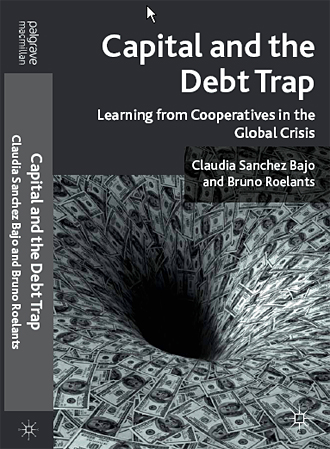
That is the central message of “Capital And The Debt Trap: Learning From Cooperatives In The Global Crisis”, a 288-page compendium by the team of Claudia Sanchez Bajo and Bruno Roelants in which the authors draw upon four ‘real world’ case studies of how cooperatives have been able to generate wealth despite significant regional and global financial disruptions. Of special note is the concluding chapter ‘The Global Crisis: Mother of All Warnings”. Informed, analytical, and informative, “Capital And The Debt Trap” will prove to be thoughtful, thought-provoking, and usefully instructive, making it especially recommended for professional, governmental, and academic library Economic Studies reference collections and supplemental reading lists.”
The Midwest Book Review is an organization serving community and academic library organizations. It is located in California, Wisconsin and the Upper Midwest and all its reviews are indexed by Gale Research.
“The book “Capital and the Debt Trap” now being published summarizes the development of cooperatives during economic crises with detailed data and proves to the world the value of cooperatives. The information provided by this report not only boosts the confidence of cooperatives in the world but also dispels a century’s doubts on the value of cooperatives… From “Capital and the Debt Trap”, we learn that the cooperative movement and enterprises are getting more mature in Europe, America and Asia and are bringing about a force of harmony for the world. Through the organizational form of cooperatives, numerous farmers and the weak form a power counterbalancing capital. They not only safeguard their way of self-existence and their interests but also facilitate the solution of many contradictions during economic development in different countries at a lower social cost.
After observing the development practice of cooperatives in many countries, this book found that in the 2008 financial crisis, cooperatives universally outperformed other types of economic organizations. Particularly, in comparison with the avaricious and unrestrained financial capital, cooperative banks have had a better performance and more reliable stability. In this unprecedented systemic crisis, the stable development of cooperatives fully reflects the fact that cooperative organizations sticking to the principle of democratic control can more effectively cope with market uncertainties… For impartiality and efficiency – a time-honored proposition, obviously government officials, scholars and people in business circles in the world have one more case for thinking and one extra brand new perspective….This book is a very good reference to the governments of the countries which are entering the age of the new economy. To the world economy, which is being globalized, harmony is a perpetual theme of development. However, our world still has many imperfections … Economic development alone can hardly secure social stability. The government should fulfill its duties. It not only should develop the economy but also needs to strike a balance. Obviously, cooperatives are a force which must be reckoned with.
This book prompts us to pay tribute to the ideal pursued by the forerunners of cooperatives. In the past 160 years, new elements of the times have continuously been added into the ideal of cooperative, but they have always stuck to humanistic principles that are to the opposite of capitalism. This unprecedented financial crisis has made people see the greater brilliance of humanism. We have good reasons to believe that, after successfully resisting the financial crisis, the international cooperative movement will be in a more favorable condition to play its role in economic development and gain more opportunities to make contributions to mankind.“
Prof Yang Qian, Director of the Training Center, All-China Federation of Supply and Marketing Cooperatives
“We have been falsely made to believe that competition is the way nature and society work. However, greed and competition are dis-values imposed by corporate rule. Both nature and society work on the principles of co-operation. In CAPITAL AND THE DEBT TRAP – Learning from Cooperatives in the Global Crisis Bruno Roelants and Claudia Sanchez Bajo show us how an economy based on co-operation can address the deep crisis we face.”
Vandana Shiva, Navdanya Research Foundation for Science Technology & Ecology, New Delhi
Le Capital et le piège de la dette est un livre tout à fait remarquable. Il met en lumière le rôle essentiel que pourront et devront jouer la propriété participative et les coopératives dans la résolution et la maîtrise de l’actuelle et durable crise financière. J’espère très vivement que cet important ouvrage soit bientôt disponible en français.
Recevez, je vous prie, mon amitié admirative et solidaire.
Prof Jean Ziegler, former professor of sociology at the University of Geneva and the Sorbonne, Paris and former vice-president of the Advisory Committee to the United Nations Human Rights Council.
Le contenu et la recherche qui l’a accompagné
Voilà un livre sur les coopératives qui commence par là où on doit commencer : diagnostiquer la crise que nous traversons depuis plus de cinq ans. Sans ce diagnostic, comment voir ce que les coopératives apportent ou pourraient apporter. La proposition centrale est nouvelle et singulière car elle cherche à faire la lecture de cette crise à partir d’une entrée théorique avec laquelle, en règle générale, le lecteur est peu familier : celle de repenser l’économie dans laquelle nous sommes à partir d’entreprises collectives qui, à la différence des entreprises de l’économie capitaliste de marché, ont réussi à la traverser avec plus de résilience et de sens de la responsabilité sociale. Leurs dispositifs de régulation et donc de contrôle y sont assurément pour quelque chose comme le démontrent les auteurs : règles de prévoyance interne, démocratie d’associés, refus d’adhérer à des stratégies de délocalisations, finalités et convictions sociales affichées.
CICOPA, l’organisation mondiale des coopératives de travail et autres entreprises de ce type, a été le fer de lance de la démonstration de la résilience des coopératives. Ici une chercheure, docteure en études du développement, Claudia Sanchez Bajo, et le secrétaire général de cette organisation sectorielle de l’Alliance coopérative internationale (ACI), Bruno Roelants, vont plus loin que les écrits habituels sur les coopératives qui se parlent à elles-mêmes. Ils se tournant résolument vers l’ensemble de l’économie et sur le contrôle que la société doit exercer sur celle-ci (aux échelles nationale et internationale). Ils sont aussi tournés vers des pistes de sortie de crise dans une perspective de transformation. Comme nous sommes plusieurs à le dire, il faut que les coopératives reconfigurent leur rôle en faisant face aux défis du monde d’aujourd’hui et ce à l’échelle de la planète. Ce livre y contribue en s’appuyant sur une volumineuse recherche documentaire adossée à des études de cas qui sont des expériences fortes par leur impact sur leur société (Desjardins au Québec/Canada ; Mondragon en Espagne ; une coopérative de pêcheurs mexicaine et une coopérative de travail française). Le tout enrichi d’une série d’entrevues d’informateurs-clés pris dans et hors de ces études de cas, entre autre, avec des dirigeants nationaux et internationaux du mouvement coopératif dans les grandes fédérations des secteurs étudiés.
La perspective
Une des contributions majeures de ce livre est sans doute d’illustrer d’autres possibles dans le développement d’entreprises, dans leurs pratiques, dans leurs politiques et dans des théories économiques fortement à renouveler. La dimension internationale est aussi fort bien rendue. Bref, grâce à cet ouvrage, on sort des «éternels» raccourcis des économistes libéraux et du «tout au marché». Un regret cependant : la crise écologique qui est au coeur de la crise économique actuelle ne se voit pas octroyer la place qui lui revient. Dommage. Prochain ouvrage des auteurs et de CICOPA peut-être!
Louis Favreau, sociologue, Professeur émérite de l’Université du Québec en Outaouais (UQO), Titulaire de la Chaire de recherche en développement des collectivités (CRDC), http://www4.uqo.ca/crdc-geris/
Janvier 2013 TEXTO COMPLETO DA RESENHA DO PAUL SINGER, RESENHA DO LIVRO DE CLAUDIA SANCHEZ BAJO E BRUNO ROELANTS, O CAPITAL E A ARMADILHA DA DÍVIDA, APRENDENDO DE COOPERATIVAS NA CRISE GLOBAL
Prof. Paul Israel Singer (24 March 1932 – 16 April 2018), Austrian-born Brazilian economist and scholar
Esta obra sobre a atual crise global do capitalismo é uma análise surpreendente e fascinante da transformação que o modo de produção hoje dominante no mundo sofreu por obra duma globalização longamente ensaiada e finalmente lograda num momento em que a contra-revolução neoliberal triunfava no então assim chamado Mundo Livre.
Claudia Sanchez Bajo e Bruno Roelants fizeram uma longa e cuidadosa pesquisa sobre a “Mãe de todas as crises” e situam sua análise no quadro das transformações que a 3 ª Revolução Industrial, a da Informática e da Internet, possibilitou às classes capitalistas, que desta maneira renovaram seu modo de produção e prepararam o cenário para o desencadeamento de novas crises de amplitude mundial e de conseqüências avassaladoras para uma humanidade despreparada para enfrentar os desafios que o capitalismo globalizado e eletrônico lhe apresenta. O que é a sociedade do conhecimento para uns é exclusão econômica pelo desemprego e o domínio feroz do capital financeirizado no âmbito do trabalho e da vida cotidiana para muitos outros.
Países da Europa estão sendo submetidos a uma cura neo-liberal de austeridade, com seus governos cortando salários, empregos públicos e serviços sociais, para no fim serem substituídos por tecnocratas vindos diretamente da direção dos gigantes financeiros que hoje dominam o cenário político-econômico global. A função redistributiva do Estado virou anátema do novo Poder Político imposto pelos bancos credores da dívida pública destes países. O corte de impostos pagos pelo 1% mais rico da sociedade, nos Estados Unidos, é um escárnio diante de milhões de famílias pobres que foram despejadas nos últimos anos de suas casas hipotecadas. O que explica a indignação duma parte significativa da juventude estadunidense, que enxerga no capital financeiro o responsável principal pela crise global, que lhes rouba qualquer perspectiva de inserção decente no mundo do trabalho.
Os autores deste livro mostram que, ao mesmo tempo em que a crise atrai todas as atenções, surge da penumbra um novo capitalismo produzido pela desregulação do capital financeiro e pela privatização em escala mundial dos principais serviços públicos: previdência social, educação, saúde, saneamento, energia, comunicações etc. tidos como “sociais” exatamente porque deveriam ser acessíveis a todos, sobretudo aos mais pobres, dada sua importância vital para a sobrevivência e uma vida digna.
A globalização possibilitou a construção de cadeias internacionais de produção e distribuição de produtos industrializados, altamente interconectadas por conglomerados globais que dominam segmentos inteiros da economia mundial. A queda das barreiras protecionistas ao comércio internacional e a liberação da movimentação internacional do capital financeiro de qualquer controle público nacional ou internacional, dando-lhe o direito de se estabelecer em qualquer lugar do mundo, inclusive em “paraísos fiscais” deu livre curso à concentração do capital globalizado, enquanto estados nacionais foram esvaziados de suas atribuições econômicas e sociais, tornando-se diretamente dependentes dos bancos globalizados que adquirem os títulos de suas dívidas públicas.
Sobre este pano de fundo, os autores do livro delineiam o surgimento do poder financeiro, medido pela expansão da riqueza financeira em detrimento do crescimento da riqueza real. Em 1982, nos EUA sob o governo de Ronald Reagan, foi feita uma reforma das aposentadorias que levou bilionários fundos de pensão a investir seus capitais nas Bolsas de Valores. As agências de avaliação de risco, que dão notas a países, governos, bancos e entidades econômicas, mantêm parcerias com os próprios bancos e assim puderam dobrar seus rendimentos anuais, que entre 2002 e 2007 passaram de 3 a 6 bilhões de dólares. A riqueza financeira aumentou também graças aos cortes dos tributos sobre os ricos, o surgimento dos paraísos fiscais e as inovações financeiras – os derivativos e os fundos de “hedging”- que se tornaram objetos de especulação de milhões de cidadãos, sobretudo depois que puderam dispor de computadores pessoais diretamente conectados a Wall Street.
Os autores depois de caracterizar o mundo novo trazido pela globalização neo-liberal, tratam de “descobrir como uma trajetória está sendo construída social, institucional e politicamente, de tal forma que ela acaba destruindo mais riqueza do que gera.” Esta trajetória é a da crise atual e de todas as que se seguirão enquanto o capitalismo neoliberado e globalizado mantiver sua hegemonia. Ela se compõe duma seqüência de três armadilhas que se fecham sucessivamente, aprisionando aqueles que se endividaram na ingênua crença de que a disponibilidade de crédito pelos bancos seria permanente.
A primeira armadilha é a do consumo. Nos primeiros anos do atual século, a demanda por consumo nos EUA continuou a crescer, mesmo quando o poder aquisitivo do povo havia deixado de aumentar. A explicação é que os bancos, ansiosos por aplicar a juros o dinheiro acumulado em seus cofres, continuaram a dar empréstimos às famílias com base na renda por elas declarada, sem se preocupar em obter qualquer comprovação da mesma. Entre 1992 e 2000, o crescimento econômico nos EUA baseou-se no aumento inédito do gasto privado das famílias em relação às suas rendas. As compras a crédito se concentraram na aquisição de moradias e automóveis, provavelmente porque os débitos assumidos pelos consumidores estavam garantidos pelas casas e carros financiados. Quando, em 2006, a crise foi desencadeada pelo estouro da bolha imobiliária, a armadilha do consumo se fechou prendendo em seu interior milhões de consumidores endividados e que não tinham condições de repagar seus débitos.
O tamanho da armadilha do consumo nos EUA pode ser aquilatado pela evolução do endividamento das famílias em relação a sua renda: este era 85% em 1990, 101% em 2000 e 139% em 2007. Esta evolução só se explica pela hipertrofia das finanças proporcionada pela desregulamentação do setor e o enorme impulso à especulação dado pela difusão do acesso à internet. A causa imediata da crise internacional foi a inadimplência dos pobres que haviam sido contemplados com empréstimos hipotecários denominados de “sub-prime” em tal escala que sua desvalorização levou à bancarrota os maiores bancos do mundo, não só dos EUA mas também da Europa e da Ásia.
A segunda armadilha é a da liquidez, que já havia sido registrada por Marx, há 150 anos. Quando a crise é desencadeada, até mesmo o crédito interbancário cessa, porque a confiança de que os empréstimos serão repagos praticamente desaparece. As bancarrotas de grandes bancos faz com que ninguém mais acredite nos que demandam crédito. É bom lembrar que a palavra crédito vem de crença e finança vem de confiança. Quando a realidade mostra que mesmo os que eram tidos como muito ricos eram obrigados a dar calote, não é de se espantar de que as transações financeiras praticamente cessam e todas compras/vendas têm de ser feitas com pagamento imediato em dinheiro. Este se torna escasso porque todos tratam de guardá-lo, embora a riqueza entesourada obviamente não rende juros. A armadilha da liquidez consiste numa situação de crise financeira, em que por falta de confiança o crédito rareia, quase todas as transações sendo feitas à vista. Numa situação como essa, quase todos tratam de entesourar dinheiro vivo, o que provoca escassez do mesmo. Esta falta de numerário ocasiona enorme redução das compras, pois ninguém vai gastar seu precioso dinheirinho comprando algo que não lhe seja imediatamente necessário.
A queda da demanda provoca a queda dos preços, que produz a temida deflação. Os vendedores subitamente não encontram compradores para suas mercadorias e no fim do dia acabam com estoques indesejados na mão. Como precisam de dinheiro para pagar suas compras, acabam por reduzir os preços para ver se conseguem atrair fregueses. Sendo a armadilha duradoura, os vendedores que perdem fregueses para os competidores passam a cobrar ainda menos, de modo que a deflação se intensifica, o que causa uma retração ainda maior dos compradores, pois todos adiam para amanhã o que não precisam comprar hoje porque sabem que amanhã pagarão ainda menos.
Deste modo a armadilha da liquidez causa crescente encolhimento das vendas, que faz com que o comércio reduza suas compras aos produtores industriais e agrícolas, que por sua vez reduzem sua produção e começam a demitir seus empregados. Deste modo, uma crise financeira que surge em alguns setores se estende por toda economia e tende a se aprofundar cada vez mais, pois o aumento do desemprego reduz ainda mais a demanda. Quando nossos autores se referem a uma trajetória que acaba destruindo mais riqueza do que gera, eles se referem a um sistema econômico que provoca periodicamente crises de subconsumo, que rapidamente assumem a aparência de crises de superprodução. Estas condenam tanto trabalhadores como as máquinas a um ócio involuntário e a produção que deixa de ser realizada equivale à destruição de riqueza.
Os efeitos conjugados das armadilhas do consumo e da liquidez compõem a armadilha da dívida. Esta atinge a um número muito maior de pessoas porque o recurso à dívida se generaliza, a especulação financeira se tornando, sobretudo nos EUA, um esporte de massa. Os autores nos alertam que “pela primeira vez na história da humanidade, a especulação é a principal fonte de geração de renda.” A economia financeira acumulou montantes 30 vezes maiores que os transacionados na economia real…Agora a palavra investidor define pessoas ou firmas que jogam no mercado financeiro e nada mais são do que especuladores.” “Grandes corretoras têm expandido suas apostas com enormes quantidades de dívidas. As firmas de Wall Street assumiram dívidas num total 32 vezes o seu capital próprio.”
Depois desta análise da transformação do caráter das crises em função da financeiração do capitalismo, a atenção dos autores se volta para o deslocamento do controle em relação à propriedade dos bancos, fundos de pensão, empresas transnacionais etc. Nas últimas décadas o controle destes novos centros de poder vem sendo mais importante do que a propriedade, porque ele está passando dos diretamente interessados para ausentes como resultado da reconfiguração cada vez mais freqüente do cenário econômico por meio de fusões e tomadas de controle, hostis ou negociadas, entre grandes negócios.
Atores globais controlam de longe entidades econômicas que não se encontram entre os seus principais interesses. As entidades controladas são freqüentemente saqueadas pois o objetivo dos atores globais é provocar o seu crescimento rápido para se apropriar dos lucros, o que impede a geração de riqueza no longo prazo, que seria decisiva para a estabilidade da economia mundial. Além disso, as grandes transnacionais tanto financeiras como da economia real aumentaram vigorosamente sua influência sobre os enfraquecidos governos nacionais. Nos EUA, gigantescos bancos de investimentos (que vivem da especulação e não do financiamento das empresas da economia real) influem na política econômica e financeira do governo, participando diretamente da regulação da mesma. O mesmo acontece na União Européia, cujo governo convoca firmas muito grandes para constituir parcerias na formulação da governança econômica do continente. O que não impede que firmas gigantescas continuem se alimentando de bolhas, armadilhas e crises, das quais têm de ser salvas com o dinheiro que o fisco recolhe dos cidadãos.
A indústria hoje é excessivamente explorada por firmas financeiras, que se apropriam de grande parte do lucro para empregá-lo na captura de outras firmas [take overs], em especulação e propaganda e não o suficiente em atividades que melhoram a produtividade e em investimento produtivo, conhecimento e qualificação. As firmas muito grandes, engajadas em múltiplas atividades em todo o globo e interligadas através das Bolsas de Valores, agora globalizadas, acarretam um perigo sistêmico para a economia do mundo.
“A mudança começou com os fundos de pensão. Nos EUA, eles estavam cronicamente subcapitalizados. Eram insustentáveis no longo prazo. A saída encontrada foi extrair lucros do exterior: tomar parte na gigantesca onda de privatizações no mundo, começando na América Latina e assegurando que a liberalização permitisse que seus fluxos financeiros fossem automáticos. Em 1992, o governo dos EUA pediu aos investidores estadunidenses em fundos de pensão que, no exterior, tratassem de controlar qualquer empresa em que punham dinheiro para reestruturá-la e extrair o máximo de lucro que fosse possível. Eles sabiam que ao fazer isso em breve padronizariam todas as empresas do mundo.”
“A crise da dívida nos países em desenvolvimento forçou-os a abrir suas economias e suas empresas à aquisição por estrangeiros. A partir de 1992, o ajuste dos padrões contábeis para facilitar a avaliação total de empresas e o investimento ativo dos fundos de pensão em ativos do exterior gradualmente construiu uma aliança, articulada por meio da Bolsa, que confiava que o mundo poderia seguir a liderança de Greenspan numa permanente subida do justo valor [Just value]. Além disso, inovação em tecnologia da informação contribuiu com a idéia de acabar gradualmente com o dinheiro e os bancos transformaram depositantes e proprietários em usuários de serviços contratuais padronizados. Tanto quanto qualquer outro ator do setor financeiro, os bancos participaram ativamente da globalização antes da crise e se engajaram em concentração, fusões e aquisições, ampliando as escalas de seus negócios. Os que não se engajaram nesta tendência logo foram adquiridos por outros. De acordo com a Federal Deposit Insurance Corporation, só em 1997, houve 599 fusões bancárias, reduzindo o número de bancos nos EUA de cerca de 14.000 para 9.143”.
“Os mercados financeiros são facilitadores-chave do uso de dívida, na expectativa de que as firmas sejam capazes de controlar riscos. No nível da firma, a aversão ao risco levou ao endividamento excessivo. E o uso da dívida sem limite e transparência pode fazer o sistema afundar como num buraco negro. Hoje em dia, as firmas têm de rolar suas dívidas para continuar funcionando. (…) No auge da crise global, as firmas foram privadas das somas de que precisavam e forçadas a desalavancar [cortar gastos para pagar dívidas], abandonando tudo o que puderam de trabalhadores a fábricas improdutivas ou custosas.”
A globalização trouxe uma nova contradição: ao facilitar a concentração do capital freqüentemente por iniciativa do capital financeiro, ela fez com que surgissem firmas gigantescas, consideradas ‘grandes demais para falir’, firmas tão fortemente interligadas que se alguma das maiores falisse, todas as demais correriam o risco de serem arrastadas ao mesmo destino. O que se verificou na prática em setembro de 2008 quando a bancarrota do banco Lehman Brothers provocou por contágio a quase falência dos maiores bancos de investimento do mundo, que só não se consumou graças à intervenção salvadora dos governos. Como os demais ‘grandes demais para falir’ foram salvas, o atual contexto não mudou: a economia mundial continua dominada por algumas dezenas de milhares de empresas transnacionais, estreitamente interdependentes, o que torna o uso generalizado do endividamento insustentável.
Claudia Bajo e Bruno Roelants atribuem o novo caráter das crises do capitalismo às mudanças que a globalização + financeirização provocaram nos papeis dos stakeholders [interessados] e dos shareholders [acionistas controladores] na condução dos conglomerados transnacionais que dominam a economia mundial. “O maior deslocamento do papel das finanças foi a passagem do investidor passivo ao investidor ativo, que gradualmente construiu poderosos atores mundiais: fundos de investimentos e fundos soberanos de riqueza. O passivo acionista financeiro tornou-se controlador ativo, enquanto o agente ativo ou administrador adquiriu ações e assim tornou-se proprietário. A administração de nível médio foi reduzida por reestruturações resultantes de fusões ou aquisições das empresas, afetando o fluxo interno de informações e a organização do trabalho nas firmas, reduzindo a confiança, dificultando as negociações com outros interessados.
Acionistas absenteistas trazem dinheiro emprestado, deixando a firma endividada e sob controle externo, sobrecarregada de custos de consultoria, serviços e reestruturação. A racionalidade dos interesses financeiros em retornos em curto prazo externos à firma conflita com o desenvolvimento de longo prazo da firma, preferido pelos outros interessados – administradores, fornecedores, clientes e trabalhadores, todos com relações permanentes entre si e com a firma. Os acionistas financeiros visam ganhos imediatos e se estes não se materializam eles podem facilmente vender sua participação acionária e investí-la em outro lugar. Como se vê, a dívida beneficia os acionistas servindo-lhes de instrumento disciplinador para controlar a administração, além do pagamento de juros poder ser deduzido da receita tributável (por suposto nos EUA).
A análise do impacto da financeirização sobre as firmas é profunda e revela um processo contínuo de reestruturação, que tende a debilitar a firma e sobretudo a influência dos diretamente interessados nela. Numa certa altura (p.95) os autores se perguntam: com estas mudanças, qual é o elemento remanescente mais importante duma firma? Se a produção é deixada para outros mediante subcontratação, se o suprimento de mão-de-obra e a administração são sub-contratados, se pesquisa e desenvolvimento é deixado para principiantes, que podem ser comprados se a inovação é vendável, se o processamento de dados é terceirizado, o que sobra? Potencialmente a marca e a publicidade por meio de contratos de longo prazo. A conclusão da análise é que há um deslocamento do papel central da propriedade de fases anteriores do capitalismo para um sistema que usa o controle para obter benefícios sem correr o risco da propriedade. Mudou o tipo e escala do controle e uma perda de controle pelos reais interessados econômicos, o que teria encorajado mais endividamento.
Neste contexto de perda de credibilidade de velhas certezas quanto à tendência ao equilíbrio dos mercados livres, ressurge a idéia da importância do controle das firmas pelos reais interessados e a prioridade do bem comum em contraposição ao predomínio do lucro financeiro de curto prazo. Um indício dessa mudança poderia ser o último Prêmio Nobel de Economia conferido a Elinor Ostrom, notória defensora da administração dos “comuns” pela coletividade dos reais interessados em sua preservação. Ela escreveu que “o que falta na caixa de ferramentas do analista de políticas – e do conjunto de teorias bem desenvolvidas de organização humana – é uma teoria adequadamente especificada da ação coletiva pela qual um grupo de interessados pode se organizar voluntariamente para reter os resíduos de seus esforços. Exemplos de empresas auto-organizadas abundam. A maioria das firmas de advocacia assim como a maioria das cooperativas também são exemplos.” (p.214)
Claudia Bajo e Bruno Roelants oferecem elementos para preencher a lacuna detectada por E.Ostrom. estudando o desempenho de quatro cooperativas: a cooperativa de mergulhadores e Pescadores de Natividad, no México; a cooperativa Ceralep, na França; o Grupo Cooperativo Desjardins, em Quebec, no Canadá; e o Grupo Cooperativo Mondragon, no País Basco, na Espanha. São quatro casos muito distintos e bastante representativos de diferentes facetas do cooperativismo contemporâneo.
Natividad é uma pequena ilha na costa do México, em que moram 80 famílias, que vivem da captura de abalones, um marisco muito raro e valioso. A cooperativa foi criada em 1942 e ela explora áreas marítimas por concessão do governo. Nos anos 1980, a corrente marítima El Niño aqueceu as águas e reduziu o estoque de mariscos. Então as reservas foram superexploradas tanto pela cooperativa como pela pesca ilegal de gente de fora. Mas, pelo fim da década a cooperativa conseguiu superar as dificuldades, controlar práticas predatórias evitar uma corrida para um crescimento de curto prazo. Ela adotou uma abordagem científica ambiental e entre outras medidas contratou um biólogo. Durante a crise, a assembléia da cooperativa decidiu fechar uma zona marítima específica por 4 anos. Os abalones puderam se reproduzir e os pescadores obtiveram mais benefícios do que esperavam. O biólogo propôs há alguns anos que a cooperativa investisse em reservas marítimas para assegurar a futura disponibilidade de abalones, pepinos marítimos e caracóis marítimos. A proposta foi aprovada e o fechamento deste espaço marítimo fez com que a receita anual da cooperativa sofresse uma perda de 300 mil dólares. Os membros sabem que este sacrifício será provavelmente compensado no futuro. As concessões de pesca terão de ser renegociadas em 2012, mas os membros estão confiantes que serão renovadas, o que lhes dá segurança para planejar a longo prazo as áreas de pesca e o desenvolvimento da cooperativa.
Ceralep é uma empresa de pequeno porte francesa que produz isoladores cerâmicos, fundada em 1921, adquirida por um fundo de capitalização em 2001, liquidada por este em 2004 e então transformada em cooperativa pelos seus próprios empregados com a ajuda duma rede de instituições cooperativas local e nacional Depois da troca da administração, os negócios aumentaram rapidamente e a empresa está agora em plena expansão, contratando novos empregados, com uma carteira sólida de clientes, uma proporção substancial de exportações e novas perspectivas de negócios na Ásia.
Vejamos algo da história de Ceralep: Ceralep foi criada em 1921 e desde o começo desenvolveu perícia em isoladores elétricos. Em 1973, foi chamada de Ceralep depois de uma fusão com outro importante produtor de cerâmica técnica. Desde então ficou sendo a única companhia na França que produzia isoladores cerâmicos muito grandes. Em 1989, Ceralep foi adquirida pela firma suiça Laufen, que por sua vez a vendeu à Companhia austríaca Ceram em 1993. Tanto suiços como austríacos tentaram se apoderar da tecnologia dos isoladores cerâmicos.
Em 2001, a firma estadunidense PPC Insulators adquiriu a secção de isoladores da Ceram. PPC Insulators havia sido adquirida em 1998 pelo Fundo de Capitalização Riverside, que era propriedade duma série de fundos de pensão dos EUA. A relação dos empregados com a administração era estranha: eles começaram por demitir o diretor, mas cada vez que os empregados pediam aumento eram atendidos sem hesitação. A produção caiu a nível muito baixo, os trabalhadores não tinham o que fazer, até que descobriram que os novos donos planejavam fechar a Ceralep. O clima entre administração e empregados piorou rapidamente e a pressão se tornou insuportável. Um deles se suicidou na fábrica e deixou uma carta em que diz que foi pressionado. Neste período, os trabalhadores impediram diversas tentativas de remover grandes máquinas, bloqueando a entrada dos caminhões no portão da fábrica. O grupo PPC acabou tendo de entregar uma petição de falência, pois o bloqueio dos operários não lhes deixava outra alternativa.
O conselho operário começou a estudar com um contador um projeto de compra da firma pelos trabalhadores, com a esperança de que ela lhes seria entregue pelo preço simbólico de um euro. Em janeiro de 2004, o conselho operário apresentou seu projeto ao tribunal de comércio local e seu presidente Robert Nicaise entrou em contato com a união regional de cooperativas operárias URSCOP, que os assessorou na realização da compra, mas não por um preço simbólico. O dinheiro acabou sendo reunido pelos próprios operários e suas famílias e depois mediante a mobilização da comunidade local, que contribuiu 50 mil euros e diversas instituições francesas de apoio a cooperativas operárias.
No meio tempo, todas as principais autoridades públicas da região, da municipalidade e a associação local de municipalidades apoiaram o projeto dos operários da Ceralep e deram uma ajuda substancial, inclusive comprando os ativos fixos da empresa. Finalmente os trabalhadores conseguiram o milhão e meio de euros necessários e a aprovação do juíz do Tribunal Comercial. A conclusão é que vimos o caso duma companhia cuja racionalidade foi distorcida por investidores absenteistas em ininterrupta sucessão, que se tornaram controladores a distância e trataram a firma como uma ficha trocável numa cadeia global de suprimento. Esta racionalidade levou a firma à bancarrota. Depois que a causa da bancarrota foi removida a companhia está indo bem. O controle foi transferido de controladores à distância para interessados presentes, que assumem o risco.
“O Grupo Cooperativo Desjardins é a mais importante instituição financeira da Província canadense de Quebec e a 6ª do Canadá. Com ativos no valor de US$ 155,5 bilhões é um dos principais atores financeiros e econômicos da 9ª maior economia do mundo” Ele foi o objeto do terceiro estudo de caso cooperativo do volume em exame. “Desjardins é também o maior empregador privado em Quebec com 39.000 empregados e está entre os maiores empregadores no Canadá com um total de 42.000 empregados no país. Apesar de todo este poder econômico, financeiro e empresarial, Desjardins não procura maximizar o retorno sobre o investimento dos acionistas, mas assegurar serviços satisfatórios aos seus 5,8 milhões membros proprietários, dos quais 5,4 milhões em Quebec, que constituem 70% da população desta Província.
O Grupo Cooperativo Desjardins é constituído por 481 cooperativas financeiras locais autônomas, que em conjunto o possuem e controlam. Ele existe há 110 anos e foi criado para atender as necessidades financeiras de pequenos agricultores, produtores e assalariados. Os autores de CAPITAL AND THE DEBT TRAP se detêm na fascinante história do Grupo Desjardins porque se trata dum dos maiores conglomerados financeiros do mundo que, num período em que o capital financeiro se globaliza e conquista incontrastável hegemonia na economia capitalista mundial, se mantêm fiel à sua missão cooperativa e aos seus membros-clientes pertencentes às classes trabalhadoras, mas sem com isso perder a competitividade.
Cabe aqui apenas resumir brevemente as conclusões dos autores. O Grupo Desjardins conseguiu primeiro democratizar e descentralizar os serviços financeiros, tornando-os acessíveis a todas as classes e os difundindo pelas comunidades locais de Quebec. Durante a primeira metade do século passado, o grupo teve ampla atuação na modernização da agricultura. Depois da II Guerra Mundial, ele fez abundantes empréstimos hipotecários, que transformaram muitas famílias em proprietários de suas habitações. Desjardins fez com que várias gerações de Quebecois aprendessem a agir coletivamente para desenvolver sua economia local e adquirissem através de suas caísses escolares os conhecimentos básicos de como poupar. Atualmente, 6.258 presidentes e membros de diretorias de caísses locais, em geral gente comum, aprenderam como um banco funciona e são responsáveis pela sua supervisão.
O Grupo desenvolve uma oferta integrada a meio milhão de negócios que são seus clientes. Para alcançar tais resultados, o Grupo teve de construir delicado equilíbrio entre as imposições da concorrência financeira e os seus objetivos sociais e entre a segurança financeira de longo prazo dos seus membros e as aspirações de curto prazo dos mesmos. Ao fazer isso, Desjardins se opõe às armadilhas do consumo e da dívida, analisadas acima. Na realidade, ele não gera risco sistêmico: ele apóia o desenvolvimento econômico e social de longo prazo e promove a igualdade e a confiança.
A estruturação das caísses num agrupamento horizontal desencadeou um forte potencial econômico e social: em vez de permanecerem estruturas isoladas, como eram no começo e poderiam ter permanecido, as cooperativas de crédito locais Desjardins conseguiram criar um dos maiores grupos financeiros da América do Norte, sem perder sua capilaridade e continuando totalmente dedicadas à prestação de serviços ao cidadão local e aos negócios locais. A tendência a um excesso de fusões foi controlada, o perigo de que as subsidiárias – seguradoras, fundo de capitalização e fundos de investimentos regionais – poderiam aumentar sua influência, particularmente em termos de gestão tecnocrática, foi igualmente evitado por uma série de reformas de governança sucessivas em que o nível de controle conjunto sobre as subsidiárias foi incrementado.
Ao expandir a lógica cooperativa de priorizar a base das caísses locaispara um sistema tão amplo como a Província de Quebec com seus quase 8 milhões de habitantes, Desjardins foi o promotor duma meso-economia, tendo sido por mais de um século um dos principais atores no desenvolvimento de comunidades locais em Quebec, além de ter desempenhado um papel chave na estabilidade financeira do Canadá.
Isso se tornou particularmente notável durante a crise, ao contribuir para que o Canadá se distinguisse por ter um dos sistemas bancários mais estáveis do mundo. Contrariando as teses de que a administração democrática acarreta um custo elevado, a experiência de Desjardins mostra que os procedimentos democráticos são realmente, em parte, um custo, mas por uma função social insubstituível, tal como a capilaridade em municipalidades remotas e o fato de que ele é a única instituição bancária em Quebec que se abre aos pobres, enquanto eles são principalmente um investimento de longo prazo, porque eles legitimam decisões e proporcionam estabilidade às instituições e porque o nível e a sofisticação dos debates tornam mais provável que todos os pontos de vista serão tomados em consideração, deste modo levando à decisão mais sustentável.
Além do mais, contra as assimetrias de informação, que muitos interessados sofrem, como é o caso de clientes de grandes instituições financeiras, onde a confiança dos depositantes está sendo superada por arranjos opacos e segmentados de contrapartes, Desjardins não apenas nutre a noção dum movimento de proprietários-clientes ao qual se dedica, mas fornece aos últimos informações sobre grupo de negócios, textos de discussão para ajudá-los a formar opinião na tomada de decisões e lhes oferece treinamento para ajudá-los a administrar suas cooperativas locais.
A história de Desjardins também demonstra que crises sucessivas, como a Grande Depressão de 1929, várias crises nos anos 80 e 90, e a atual crise global, em vez de ameaçar a existência do Grupo de fato a reforçaram, além de lhe dar a oportunidade de realizar inovações institucionais e melhorar sua missão fundamental: a de servir seus membros.
Finalmente, deveria ser plenamente reconhecido que a experiência de Desjardins, inclusive seus mais recentes desenvolvimentos não é obsoleta e nem redundante quanto à formulação de políticas. Nos demonstra que o estudo de entidades econômicas enquanto atores é útil para repensar políticas que promovem responsabilidade e visibilidade. É um exemplo vivo do fato de que uma entidade econômica não é uma caixa preta; racionalidade e ética fazem diferença, desde que lhes permitam encontrar seu espaço na organização através da institucionalização de rotinas, pesos e contrapesos e prioridades estratégicas.
O quarto e último estudo de caso cooperativo teve por objeto o Grupo Cooperativo Mondragon. Trata-se de um grupo horizontalmente integrado por mais de 110 cooperativas industriais, de serviços, finanças, distribuição, educação e pesquisa, centrado na cidade de Mondragon, na região basca da Espanha. Em 2010, era um grande conglomerado produzindo eletrodomésticos, máquinas-ferramentas, componentes de computadores, mobília, instalações de escritório, materiais de construção, transformadores, componentes de automóveis, moldes para ferro fundido, sistemas de resfriamento, equipamento médico, alimentos e outras manufaturas. Desenvolve uma série de atividades de serviços como engenharia, urbanismo, bufê, pesquisas em setores industriais, nanotecnologia e compreende uma grande cadeia de supermercados, um banco e uma universidade. É considerado o maior complexo cooperativo do mundo, sendo a maior organização empresarial do País Basco e o 7º da Espanha.
Os autores do livro dividem a história do Grupo de Mondragon em 4 estágios: o primeiro começa em 1941 quando o jovem padre José Maria Arizmendiarrieta, de 26 anos, chega a Mondragon para assumir a paróquia. Preocupado com a pobreza da população, o padre fundou em 1943 a Escola Politécnica para jovens de 14 a 17 anos com o apoio de 15% da população local. Em 1955, cinco jovens formados pela Escola resolveram adquirir uma empresa falida que tinha licença governamental para produzir eletrodomésticos. Procuraram igualmente a ajuda da população e conseguiram reunir o dinheiro necessário para poder realizar a aquisição. Fundaram então a ULGOR, nome formado pelas iniciais dos nomes dos 5 sócios. Em 1956, a empresa transferiu-se a Mondragon, onde os sócios lhe deram o caráter de cooperativa, que acolheu como sócios mais 19 trabalhadores. Em seguida outras três cooperativas foram fundadas por ex-alunos da Escola: Arrasate em 1958 fabricante de máquinas-ferramenta, em 1963 surgiram Copreci produtora de componentes de fogões domésticos e industriais e Ederlan que era uma fundição. As três novas cooperativas vendiam quase toda sua produção à Ulgor.
O modelo de organização cooperativa foi criado por Ulgor, que elaborou seu estatuto em 1959 e foi imitado pelas cooperativas que foram criadas depois. O órgão supremo de tomada de decisões é a Assembléia Geral de Sócios; responsável pela gestão e pela representação externa é o Conselho de Governo, eleito pelos sócios. Este nomeia o Gerente e os chefes dos departamentos, que formam o Conselho Diretor com um mandato de 4 anos, podendo ser reconduzido. Além disso, há o Conselho Social, formado por sócios eleitos pela Assembléia Geral para um mandato de 2 anos sendo a metade dos membros renovada a cada ano. Em assuntos que afetam os trabalhadores – seguro social, sistema de remuneração, condições de trabalho etc. – o Conselho de Governo antes de tomar qualquer decisão tem de consultar o Conselho Social.
A apuração anual de receitas e despesas determina o saldo, que se for positivo será chamado de sobra (ou excedente) e 45% dele são colocados num Fundo de Reserva, destinado principalmente a financiar investimentos. Este Fundo é indivisível, ou seja, não poderá ser dividido entre os sócios, sendo propriedade coletiva dos membros da cooperativa. O resto da sobra será distribuído aos sócios, mas só lhes será entregue anos depois que deixarem a cooperativa. Estas normas visam garantir a expansão futura da cooperativa e sua capacidade de enfrentar situações de crise.
Na medida em que o número de cooperativas crescia, o Grupo foi criando instituições de apoio que tomavam a forma de cooperativas de 2º Grau, cujos sócios eram as cooperativas singulares. Em 1959, foi criada uma cooperativa de crédito: a Caja Laboral, que hoje é o grande banco do Grupo; sua Divisão Empresarial incuba as novas cooperativas, inclusive novas cooperativas de 2º Grau, além de assessorar as demais cooperativas. No mesmo ano de 1959 surge dentro da Caja, Lagun Aro, entidade previdenciária do Grupo, necessária porque na época as cooperativas estavam excluídas do sistema previdenciário oficial. Em 1973, Lagun Aro se tornou cooperativa de 2º Grau também. Em 1974, foi fundada Ikerlan, cooperativa de pesquisa e desenvolvimento tecnológico, também de 2º Grau. Os órgãos de direção das cooperativas de 2º Grau são compostos por representantes das cooperativas singulares e dos trabalhadores da própria cooperativa, geralmente em proporções iguais. Em 1969, a Caja promoveu a fusão de nove pequenas cooperativas de consumo, da qual surgiu Eroski, hoje a maior empregadora do Grupo e uma das maiores redes de supermercados da Espanha. Seus órgãos de direção são partilhados por igual por representantes dos consumidores associados e dos trabalhadores da cooperativa.
O segundo estágio compreende o período de 1980 a 1991.
No começo dos 1980s, o País Basco entrou numa das piores crises de sua história, atingindo fortemente o Grupo de Mondragon. Em 1986, a Espanha aderiu à União Européia, integrando sua economia ao Mercado Comum europeu. Este passo expôs suas empresas à concorrência das empresas dos outros integrantes do Mercado Comum, alguns dos quais muito mais desenvolvidos industrialmente do que Mondragon e a Espanha em geral. O Grupo de Mondragon enfrentou estas crises priorizando a preservação dos empregos. Para tanto, a Caja agia em conjunto com Lagun Aro. O caso de cada cooperativa era estudado pelas duas entidades e o seu salvamento geralmente exigia mudança da linha de produtos ou da estrutura de marketing, corte dos salários e/ou reforço do capital da cooperativa mediante contribuição dos trabalhadores. Apenas em casos extremos tornava-se necessário reduzir o número de lugares de trabalho. As propostas de medidas para o enfrentamento da crise eram submetidas a extensas consultas aos membros de cada cooperativa e naturalmente surgiam contrapropostas, o que exigia votações sucessivas até que algum consenso fosse construído.
O processo de intervenção da Divisão Empresarial da Caja durou 5 anos, com o resultado que todos empregos foram mantidos. O presidente da Caja Ormaetxea estimou que cerca da metade das cooperativas, se não mais, não teria sobrevivido sem a severa política intervencionista da Caja, que por sua vez era correspondida pelo controle do banco pelas cooperativas. O esforço vitorioso de enfrentamento da crise mostrou a importância da coesão do Grupo para o salvamento das cooperativas atingidas pelas crises que se sucederam nos 1980s. O reconhecimento deste fato levou à formulação de um estatuto para a criação de um Congresso de 350 membros. Cada cooperativa teria ao menos um membro no Congresso.
Em outubro de 1987 aconteceu o primeiro encontro do Congresso Cooperativo de Mondragon. Entre as resoluções aprovadas estava a criação de um Fundo Intercooperativo de Solidariedade, com 10% da sobra de cada cooperativa e 20% da sobra da Caja Laboral. A grande polêmica que na época dividiu as opiniões no Grupo de Mondragon era a manutenção do agrupamento distrital, isto é, espacial das cooperativas ou a sua substituição por um agrupamento setorial das mesmas. As bases deveriam preferir o critério espacial porque este correspondia aos laços de ajuda e confiança mútua entre os membros das cooperativas que conviviam na mesma área e por isso se conheciam bem, ao passo que o critério setorial permitiria obter ganhos de escala na medida em que cooperativas do mesmo setor poderiam se fundir ou ao menos unir algumas de suas operações. Mas, esta questão não pôde ser resolvida no Congresso de 1987.
Em 1988, o Conselho dos Grupos organizou uma oficina de 3 dias com 70 Diretores de cooperativas intitulada ‘O Grupo Cooperativo de Mondragon e a Comunidade Européia’. As conclusões da oficina defendiam a abordagem setorial, com centros de pesquisa para cada setor e mais delegação de poder empresarial das cooperativas aos agrupamentos. Em 1989, Ormaetxea redigiu um texto de 73 páginas intitulado “De um experimento sociológico a um grupo empresarial” argumentando que para alcançar os objetivos correspondentes à missão que lhe foi confiada, o Grupo Cooperativo deverá atuar com uma perspectiva competitiva, gerando e coordenando recursos humanos e financeiros.” O documento propôs de novo ajustes empresariais com base em agrupamentos setoriais, definindo 12 setores econômicos. Ele foi aprovado por unanimidade no Congresso Cooperativo em 1989. Foram necessários mais dois anos para redigir “as normas básicas da organização de agrupamentos setoriais, de acordo com as quais todas as cooperativas aderentes terão de pertencer ao agrupamento setorial relevante.”
O 3º estágio: o desenvolvimento da corporação Mondragon (1991-2008)
Finalmente, no 3º Encontro do Congresso de Mondragon, em dezembro de 1991, foi decidido reestruturar Mondragon numa corporação plena: a Mondragon Corporação Cooperativa MCC. Os agrupamentos setoriais, por sua vez, foram agrupados em 9 divisões mais amplas, inclusive seis em setores industriais, um no setor financeiro e um em distribuição e alimentação. Em 2005, o sistema foi reformado mais mediante a fusão entre os agrupamentos setoriais e as divisões, deixando as últimas como único nível intermediário entre as 110 cooperativas singulares do grupo e o nível de Corporação. A mudança reflete a capacidade de Mondragon de se adaptar aos novos desafios da globalização. Com presença crescente na cena internacional e num ambiente mundial crescentemente competitivo, onde fusões e aquisições se tornaram rotina, o Grupo precisava ser ainda mais coordenado do que jamais o fora antes.
Expansão e internacionalização.
A Corporação tornou-se o centro de coordenação para a expansão e atividade internacional do Grupo. A sua internacionalização foi uma das principais forças impulsionadoras para o seu estabelecimento e tem sido uma de suas principais realizações. Sob a corporação, os serviços internacionais, escritórios no exterior e plantas no além-mar multiplicaram-se rapidamente. Uma estratégia de centros de produção e comercialização mais próximos dos fregueses do Grupo foi vista como obrigatória para sua expansão. A nova política permitiu às cooperativas de Mondragon continuar se expandindo sob a economia globalizada.
A Caja Laboral agora investe amplamente fora do sistema cooperativo e sua nova divisão de investimento enfoca investimentos fora da comunidade basca. Suas reservas financeiras se tornaram tão altas que as cooperativas de Mondragon só logram absorver uma fração de sua capacidade de emprestar: de 64% em 1964, tal absorção caiu para 36% em 1980, 10% em 1993, 6% em 1996 e apenas 3% em 2009. À parte do crédito da Caja Laboral, as cooperativas estabeleceram acordos com todos os principais bancos da Espanha.. Todas as cooperativas entregam anualmente 10% de suas sobras e a Caja 20% a Investimentos Mondragon, um corpo gerido em nível de corporação. Os fundos retornam às cooperativas para financiar seus projetos. Mecanismos de solidariedade financeira entre as cooperativas existem em dois níveis: no nível central, 3% das sobras vão para um fundo intercooperativo de compensação; cooperativas que têm déficit podem solicitar cobertura de até 50% deste fundo. No nível das divisões, as Cooperativas reúnem entre 15% e 40% de seus lucros conforme suas preferências, que então são redistribuídos entre as cooperativas da divisão de acordo com os níveis salariais.
Um dos principais aspectos deste terceiro período é a forte expansão da cooperativa de consumo EROSKI. O Grupo Mondragon decidiu expandir dramaticamente a sua presença em mercados não bascos. Um programa de investimentos de US$ 249 milhões foi aprovado em 1990, o maior até então, do qual mais de 40% para a expansão de EROSKI, cujas vendas sextuplicaram entre 1990 e 2000. Como resultado desta rápida expansão, EROSKI tornou-se a maior empregadora do Grupo Mondragon, com 46.000 empregados, algo como metade de todos os empregos do Grupo. Mas destes, só 9.000 são sócios, enquanto outros 5.000 são membros potenciais. A maioria trabalha em subsidiárias.
Desde meados dos anos 1990, EROSKI tem tentado mudar gradualmente esta estrutura matricial vertical. Em 1995-97 ela estabeleceu 3 entidades tendo o estatuto espanhol de ‘sociedades civis’, um tipo de companhia com uns poucos milhares de trabalhadores sendo membros e cobrindo cerca 500 a 600 estabelecimentos varejistas. Através destas 3 sociedades os trabalhadores puderam construir as bases para futuras cooperativas, mediante a participação de trabalhadores na propriedade, nos resultados e na administração destas sociedades. No Conselho de Governo das três sociedades civis, metade representa os trabalhadores e a outra metade a EROSKI. O estatuto da futura cooperativa foi submetido a dois referendos: um nas três sociedades e outro na EROSKI: todos votaram favoravelmente. O estatuto foi finalmente aprovado em 17/1/2009.
No futuro previsível, EROSKI planeja limitar este processo aos seus estabelecimentos espanhóis, considerando complicado demais replicá-lo do outro lado da fronteira, na França. No entanto, se a cooperativização das subsidiárias de EROSKI der certo é possível que ela acabe sendo um precedente fundamental para as cooperativas industriais do Grupo, muitas das quais têm subsidiárias pelo mundo; algumas cooperativas já estão tentando instituir alguma democracia participativa nelas.
O sistema educacional de Mondragon tornou-se muito amplo, sendo a criação da Universidade de Mondragon, em 1997, sua inovação mais notável. Atualmente, a Universidade tem cerca de 4 mil estudantes e oferece 22 cursos de graduação, 15 mestrados e 8 cursos de especialização universitária. Dentro da universidade, o Instituto de Pesquisa Ranki enfoca o tipo cooperativo de organização. Outra instituição educacional de Mondragon é o centro Otalora de treinamento. Sua missão se centra na educação cooperativa e empresarial nas cooperativas de Mondragon. Cursos são organizados a pedido das cooperativas do Grupo. Recentemente foi decidido que Otalora deveria oferecer treinamento a todos membros das cooperativas e não apenas aos líderes, por meio de cursos de dois dias. Em 1992 e 1993, uma delegação de líderes cooperativos chineses recebeu treinamento em Otalora. O mesmo foi feito para lideranças cooperativas do Centro-Leste da Europa e para numerosos grupos da América Latina.
O quarto estágio: lidando com a crise (2008-2010). O impacto da crise sobre Mondragon.
Entrevistas com líderes de Mondragon mostraram que esta crise é percebida como a pior que Mondragon já sofreu, mais dura do que a crise do começo dos 1980. O excedente total do Grupo caiu de 792 milhões de euros em 2007 para 71 milhões de euros em 2008 e para 61 milhões de euros em 2009. Neste ano houve uma recuperação em virtude da ajuda pública em vários países europeus, mas, após esta medida temporária a situação parece muito incerta. Os lucros da Caja em 2008 foram meros 100 milhões de euros. Em 2009 eles caíram para 56 milhões de euros, apesar do aumento de 0,2% dos empréstimos e de 4,5% da poupança individual, seguindo o aumento geral da participação no mercado dos bancos cooperativos.
O que o Grupo está fazendo para enfrentar os efeitos da crise.
De acordo com José Inácio Garate, que ocupou posições de lideranças em Mondragon por 30 anos, “o modelo cooperativo baseado na transparência e na distribuição da riqueza tem maior capacidade de responder porque legitima as decisões difíceis que têm de ser tomadas numa situação de crise.” Garate aventa que “por sermos unidos podemos antecipar tendências e ter uma visão que outras empresas do mesmo tamanho não podem ter facilmente. Todo ano em novembro há um encontro anual com todos os diretores de todas cooperativas, cerca de 150 pessoas ao todo, que emite diretrizes para os planos de gestão. Estávamos conscientes que estaremos enfrentando uma grande crise. Algumas cooperativas, como as que produzem bens de capital tiveram um excelente 2008 e um muito bom 2009. Assim os que não aplicaram as recomendações então podem fazê-lo em 2010. Por sua vez as cooperativa do setor automobilístico começaram a aplicá-las imediatamente em novembro de 2008.
De acordo com a maioria dos líderes de Mondragon entrevistados, as medidas financeiras têm sido fundamentais. Internamente, o sistema de capitalização sistemática em Mondragon, inclusive tanto as reservas indivisíveis como também a capitalização dos excedentes, que são distribuídos aos membros apenas quando se retiram, provaram ser de grande valor para atender as necessidades financeiras das cooperativas sob a crise. As medidas que estão sendo efetivadas no nível das cooperativas singulares incluem a redução do gasto ao absoluto mínimo (inclusive do aquecimento), um decréscimo de 30% dos investimentos entre 2008 e 2009, venda sistemática de ativos desnecessários, redução drástica dos estoques, recuperação rigorosa de pagamentos, a utilização de todos os recursos públicos, abatimentos de impostos e uma redução de remunerações de 8% democraticamente aprovada. Além disso, um número de outras medidas estão sendo tomadas entre as cooperativas do Grupo, tais como compras em comum. Os fundos centrais de solidariedade estão também sendo ativados para ajudar as cooperativas que estão sofrendo as maiores dificuldades financeiras.
Como medida anticrise, algumas cooperativas decidiram se fundir. O Presidente da Divisão Danobat Rafael Barrenechea explica como isso é feito: “A divisão faz uma proposta depois de um estudo. A proposta precisa então ser debatida e aprovada primeiro pelo Conselho de Governo e depois pela Assembléia Geral de ambas as cooperativas. As duas têm de votar ao mesmo tempo. E têm de haver boas razões econômicas para a fusão. Se alguns membros trabalhadores têm de deixar a nova cooperativa, eles serão colocados ou dentro ou fora da divisão ou em algum outro lugar no Grupo de Mondragon.
No enfrentamento da crise, a prioridade do Grupo continua sendo evitar o desemprego de qualquer membro. Aldekoa, o presidente explica: “Nunca falamos de administrar o desemprego, mas de administrar o emprego. Antes de tudo, todo emprego não-produtivo tem de ser eliminado. O direito do trabalhador membro a uma quantidade específica de horas de trabalho e ao pagamento correspondente permanece inalterado sob a crise, mas estas horas são usadas apenas se demandadas. Assim flexibilizamos o calendário. Enquanto o direito a um lugar de trabalho de determinado nível não muda, nós nunca consideramos que alguém tem o direito a um trabalho específico. Durante períodos de crise, os membros têm de trabalhar onde e quando podem ser produtivos, dentro de um raio de 50 km.”
Além disso, quando membros ficam sem trabalho em sua cooperativa, por causa da crise, o sistema de Lagun Aro coordena a redistribuição dos membros a outras cooperativas. Se há custos de retreinamento ou de transporte, eles são cobertos de acordo com o diferencial distributivo entre as duas cooperativas. Trabalhadores redundantes que não podem ser redistribuídos ficam em casa, seu custo sendo coberto por Lagun Aro e a cooperativa, por um período máximo de 2 anos. Aldekoa informa que em 2009 600 pessoas foram redistribuídas; em 2010 são 400. Entre estes estão 35 membros trabalhadores de uma cooperativa industrial que teve de ser fechada.
Estas são medidas imediatas. No longo prazo, Aldekoa diz, “a ênfase é na inovação. Para tanto tudo tem de ser melhor conectado com nossa universidade, nossas cooperativas de produção e nossos centros de pesquisa. Teremos de aumentar nossos esforços de promoção e internacionalização nos EUA, nos BRICs [Brasil, Rússia, Índia e China] e na Alemanha onde já estamos em atividade.”
À guisa de conclusão, vale a pena citar um dito do padre Arizmendi, fundador e inspirador da Corporação Cooperativa Mondragon: “Tem-se dito que as cooperativas são um movimento econômico que usa a ação educativa, mas a definição pode ser invertida dizendo que as cooperativas são um movimento educativo que usa a ação econômica.” A partir deste pensamento, os nossos autores resumem sua reflexão sobre Mondragon do seguinte modo: “É assim que todo um projeto de sociedade em nível local e regional, incluindo a maioria dos aspectos sociais e econômicos que se pode imaginar, pôde ser concebido. Mondragon não é apenas um grupo corporativo democrático, mas também um que acredita que tem uma missão especial em prol da comunidade e em prol do desenvolvimento local e regional.” O que explica porque em 2009 a Corporação Cooperativa Mondragon mudou sua denominação para Mondragon Humanidade no Trabalho.
A crise global: a mãe de todas advertências
A globalização neoliberal sem controle dos estados nacionais exacerbou a centralização dos capitais mediante crescente aquisição do controle da economia real por capitais financeiros. O que trouxe uma nova contradição: firmas ‘grandes demais para deixar que possam falir’, que tencionam continuar alargando a escala de seus negócios num ambiente econômico e financeiro de capitais estreitamente interligados, que podem facilmente levar a uma implosão sistêmica, do mesmo modo que a rápida destruição dos recursos naturais acabará por provocar um desastre ecológico.
Deixando a senda percorrida
Houve recentemente um esforço mundial para tirar lições para uma futura regulação. A crítica à teoria neoliberal está despertando atenção, convocando os governos e os bancos centrais a voltar a intervir na conjuntura antes que a explosão de novas bolhas ponha novamente tudo a perder. Uma teoria melhor e atualizada e supervisão pública se tornaram urgentes. Após 3 anos, o problema do endividamento persiste assim como suas conseqüências: demanda, crédito e investimentos insuficientes e desemprego excessivo. Os consumidores, os trabalhadores e os empreendedores locais estão sendo forçados a se submeter a processos padronizados e a se conformar com a perda de opções e a se adaptar a perenes mudanças das condições em que exercem suas atividades.
A conexão entre os indivíduos e o nível macro é construída por atividades em organizações e firmas. Por isso, é preciso atentar para as entidades econômicas, sua organização e sua responsabilidade, seus valores e práticas. Por isso, os autores sustentam neste capítulo conclusivo que hoje “precisamos aplicar práticas administrativas sustentáveis e coerentes a nossas maiores atividades econômicas de modo a responder aos desafios de nosso tempo.” Estas práticas já estão sendo usadas pelas cooperativas e outros atores autogestionários, em áreas de vital importância como alimentos, emprego, habitação, poupança, crédito, distribuição de água e de eletricidade, gestão do lixo, saúde, serviços sociais, desenvolvimento local e a disponibilidade de bens de primeira necessidade por preços adequados aos bolsos da gente comum.
Suas práticas incluem administração democrática, com pesos e contra-pesos, a constituição sistemática de reservas financeiras comuns, educação empresarial para pessoas ordinárias, emprego sustentável, sistemas empresariais horizontais e dinâmicas de cooperação. Ao passo que os negócios em grande escala se caracterizam pelo endividamento, pela preferência por resultados em curto prazo, volatilidade econômica, insegurança no emprego, atomização e desumanização no lugar de trabalho e falta de responsabilidade pela comunidade, sem falar do planeta.
Em suma, a divisão de classes no capitalismo nunca foi tão exacerbada, desde que os pobres e as mulheres conquistaram direitos políticos, no século passado, tornando os regimes políticos na maioria dos países nominalmente democráticos. A democracia instituiu direitos sociais e mecanismos de redistribuição da renda que mitigaram as desigualdades mais evidentes nos principais países capitalistas, a partir das décadas que se seguiram ao desfecho da II Guerra Mundial. Neste período, a construção dos estados de “bem estar social” pareceu humanizar o capitalismo, abrindo uma perspectiva de gradual conquista de direitos sociais pelos trabalhadores. A rebelião dos estudantes em 1968, em Paris, exigindo a democratização da universidade, abriu a perspectiva da expansão da democracia aos âmbitos da sociedade civil, inclusive à economia. Infelizmente, estes avanços foram brutalmente revertidos no final dos 1970s com o surgimento da reação neoliberal.
A partir de então o capitalismo revigorado pela globalização e pela desregulamentação das finanças passou à ofensiva, trazendo de volta as crises financeiras, o desemprego em massa e o desmantelamento das políticas sociais. O estados nacionais perderam a possibilidade de regular suas economias, que passaram a ser globalizadas e portanto dominadas por gigantescos conglomerados transnacionais. O que obrigou todos governos nacionais, inclusive os eleitos com plataformas de defesa dos interesses das classes trabalhadoras, a adotar políticas de austeridade, que impõem sacrifícios unicamente a estas classes. A atual crise econômica-financeira expôs a completa incapacidade dos governos presos na armadilha da dívida de cumprir os seus programas e deste modo tornou evidente a todos a inoperância da democracia enquanto o regime em que o exercício do poder cabe à maioria.
Se esta situação não for alterada, a democracia deixará de contar com o apoio daqueles que sempre foram os maiores interessados em promovê-la: os trabalhadores. A rebelião dos jovens nos países em que foram vitimados pelas medidas de austeridade diagnosticou com precisão o que é preciso mudar: a própria democracia política, esvaziada de seu conteúdo. O grande mérito do livro de Claudia Bajo e Bruno Roelants é indicar com grande rigor e riqueza de dados o caminho para esta mudança. Ou seja, é preciso retirar a economia do domínio da especulação financeira e fazer com que retorne ao domínio dos stakeholders, dos quais os trabalhadores são os mais importantes. A obra destes autores revela que este caminho já começou a ser percorrido pelos homens e mulheres que desde o século passado construíram empreendimentos cooperativos, que são propriedades de seus trabalhadores e de seus usuários, que são administrados de acordo com os princípios da democracia e por isso se mostram imunes às armadilhas do consumo, da liquidez e da dívida e por isso não podem ser capturados pelo capital financeiro.
O êxito econômico inegável de cooperativas de modestos ceramistas como mostra o caso de Ceralep ou de não menos modestos pescadores e mergulhadores como é o caso da cooperativa de Natividad combina perfeitamente com a pujança de extensos complexos ou corporações como demonstram os casos de Desjardins e de Mondragon. Em pequena ou grande escala, as cooperativas são viáveis mesmo quando enfrentam as circunstâncias inóspitas das crises provocadas pelo capital financeiro desregulado. É notável sua capacidade de resistir a quedas inesperadas da demanda, resistência que é fruto sobretudo da solidariedade entre os membros das cooperativas e das comunidades em que as cooperativas se localizam com elas, como evidenciam os casos de Ceralep e Mondragon.
É difícil exagerar a oportunidade e a importância desta obra. Ela merece a leitura atenta e o debate engajado de todos que se preocupam com os perigos e as oportunidades que a presente crise apresenta.